

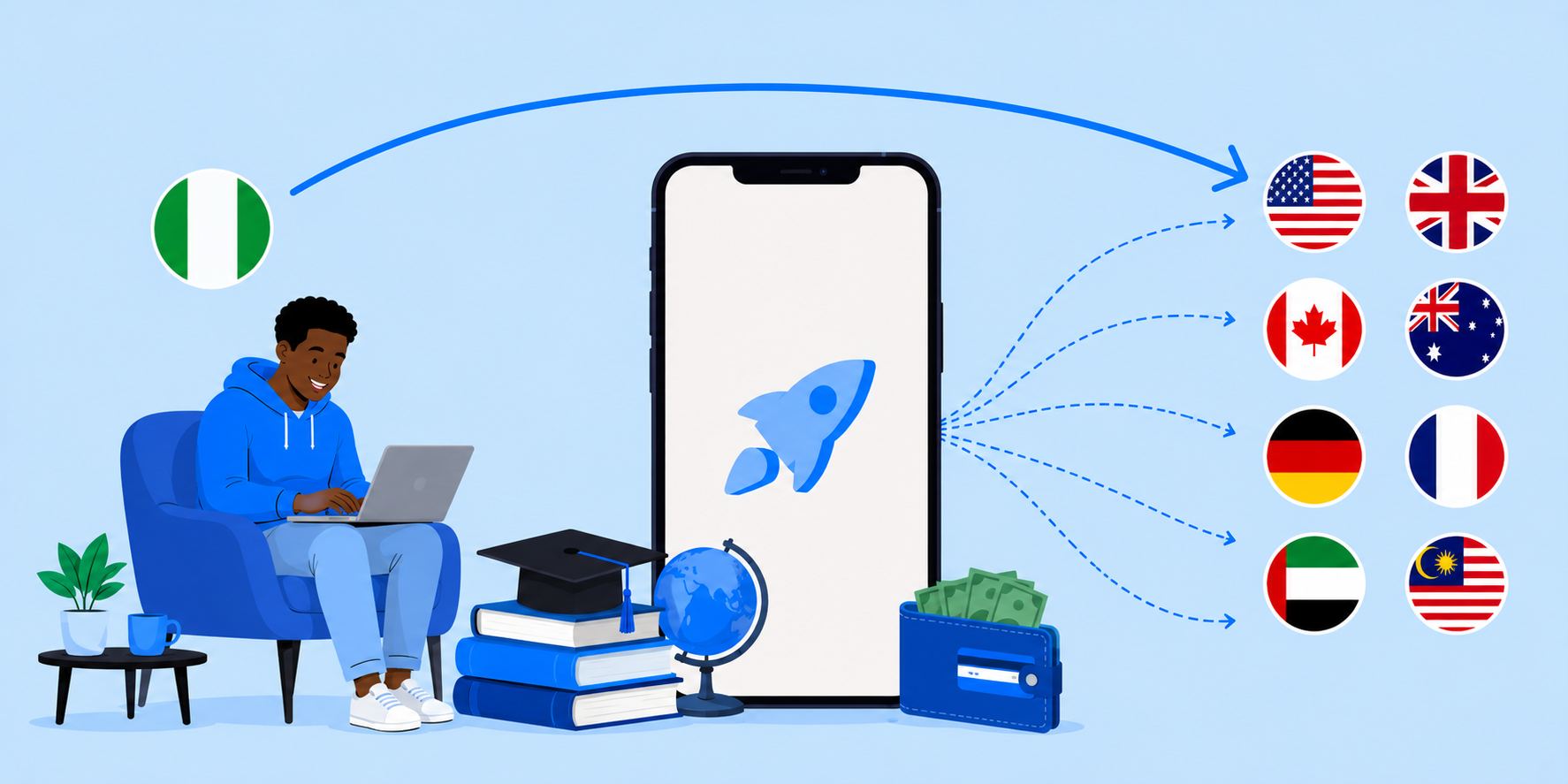

Every September, I hear the same story. A Nigerian parent walks into their bank two weeks before their child's first semester starts abroad. They have the money. They have the paperwork, or at least what they thought was the paperwork. The teller at the FX desk asks for something else. Then something else again. The deadline moves closer. The child is already there, registered, waiting for tuition to clear before they can formally enroll.
I've watched this cycle enough times to know the problem isn't usually the CBN rules. The problem is that nobody explains those rules clearly, and most bank branches apply them inconsistently. So when the CBN released its Fourth Edition FX Manual effective June 1, 2026, which raised the tuition remittance cap from $15,000 to $25,000 per semester. I wanted to write the guide I wish had existed for every family navigating this.
This is how to send tuition money abroad from Nigeria in 2026, based on what the policy actually says and what it looks like in practice.
Why the New $25,000 Limit Actually Matters
When the previous $15,000 per semester limit was set, it was calibrated against the fees that Nigerian students were paying at the time. That number no longer reflects reality for most destinations.
A year of undergraduate tuition at a mid-tier US university now runs between $35,000 and $55,000 for international students. UK universities charge international fees between £18,000 and £38,000 per year depending on the program. Canada sits somewhere in between. The old $15,000 per semester, while technically covering a two-semester year at the lower end, left parents of students at more expensive institutions navigating a shortfall they couldn't formally close through the banking channel.
The new $25,000 per semester gives more room. Two semesters now covers up to $50,000 in tuition annually through the formal channel. That still won't cover the upper end of US fees, but for the majority of Nigerian students abroad, it removes the gap that was pushing people toward informal routes with all the risks those carry.
The maintenance allowance is a separate figure. If your child lives off-campus, the CBN allows up to $5,000 per quarter to be paid directly to the student's bank account for living expenses. This comes on top of the tuition figure and follows its own documentation process. I'll come back to that distinction because it opens up a bit more flexibility on the living costs side.
The Document Question Nobody Answers Straight
The single biggest source of rejection at the bank isn't the FX rules. It's incomplete documentation, and the frustrating part is that the full list is rarely communicated upfront.
After watching families go through this process many times, the core documents you need to process an international tuition remittance through an Authorised Dealer Bank come down to four things.
A formal letter of admission from the university. Not a conditional offer. Not an acceptance email. Not a confirmation of enrollment page. The official admissions letter on university letterhead, naming the student, the program, and the enrollment period. Banks have gotten stricter about this distinction.
A tuition fee schedule issued by the institution. This document shows the per-semester or per-year cost in the destination currency. It serves as the bank's validation that the amount you're trying to send corresponds to what the school actually charges. Some universities include this in the offer package; others require a separate request from the student finance or bursar's office.
A valid international passport for the student. Unexpired, with a clear biodata page. Some banks have started requesting the passport data page be notarized, particularly for first-time transactions.
A valid student identity card from the institution, or for incoming freshers who haven't yet arrived on campus, an equivalent pre-enrollment document such as a matric number assignment letter or a student number confirmation from the registrar's office.
Some banks in the past year have also started requesting proof of current enrollment for the specific semester being paid. This is not uniformly required by the CBN rules, but several major banks apply it as an internal control. Worth confirming with your specific bank before you walk in.
I know this list looks straightforward. The reason families still get turned away is that they assume the admission letter alone is sufficient, or they bring copies when originals are required, or the tuition fee schedule is the general university fee information page rather than a document specific to the student's program. The bank has to satisfy itself that the transaction is legitimate, and they're more cautious now than they were a few years ago.
How the Process Actually Works
You process international tuition remittances exclusively through Authorised Dealer Banks. That means a CBN-licensed commercial bank with active FX processing capability. The Big Five (Access, Zenith, GTBank, First Bank, and UBA) are the most frequently used, but any CBN-authorized dealer qualifies.
My advice: skip the standard customer service desk entirely. Go to a branch with a dedicated FX or international transactions desk, preferably at a head office or major commercial banking center. The difference in staff familiarity with these procedures is significant.
The process, once your documents are accepted, runs roughly as follows. Your bank submits the remittance request through their internal FX pipeline. Processing time varies: some banks move same-day for requests submitted before noon; others take 24 to 48 hours depending on their own FX liquidity position on that day. After approval and processing, you receive a SWIFT confirmation reference. Keep that reference. If there are ever questions from the receiving institution about payment status, that reference is how you trace the funds.
The university receives the payment into their designated student accounts receivable account. Most international universities now publish their SWIFT/IBAN details on their student payments portal. Double-check that your bank is working from the current routing details, since universities occasionally update these and a wire sent to outdated banking information can take weeks to resolve.
The Exchange Rate Conversation Nobody Has
This is where I want to be direct, because the formal banking channel won't be.
When you process a tuition remittance through a commercial bank, you will pay a rate that includes the bank's spread on top of the CBN reference rate. The spread varies by bank and by how much FX liquidity they're holding on a given day. On some days, the gap between what you're paying and the interbank rate is tight. On others, you're paying materially more per dollar than you should be.
There is no clean workaround for the tuition component itself. The CBN rules require that formal tuition remittances go through Authorised Dealer Banks. You cannot route $25,000 through a fintech app and present the receipt to a UK university's student accounts office as a valid tuition payment.
What you can do is compare rates across banks before committing. Banks don't post their daily FX margins publicly, but if you're sending close to the $25,000 ceiling, calling two or three banks to ask their current rate on that amount before you decide where to transact can be worth the time. On a $25,000 transfer, even a 0.5% rate difference is $125. Over two semesters, that adds up.
For the maintenance allowance, you have more flexibility. The $5,000 per quarter that goes directly to your child's account for living expenses is a separate category. That's where fintech platforms like Afriex (though I'd encourage you to compare options across your specific corridors) can offer competitive rates and faster settlement than the formal bank wire process. Just make sure whatever you send for maintenance is clearly documented separately from tuition, since they fall under different remittance categories.
What to Do If the Bank Says No
Rejections happen, and they don't always mean the CBN prohibits the transaction. Banks reject tuition remittance requests for their own internal reasons: FX liquidity concerns, documentation mismatches with their internal checklist, or sometimes branch-level inconsistency in how they apply the rules.
If a bank turns you down, ask for the specific reason in writing. That matters for two reasons: it tells you exactly what to address, and it creates a paper trail if you need to escalate. If you have all four core documents and are still being declined, ask to speak with the FX manager, not the teller who received your request. The manager has more context and more authority to resolve edge cases.
If you've been consistent with documentation and are still hitting walls at one bank, try another authorized dealer. Access Bank and Zenith in particular have invested more systematically in tuition remittance processing in recent years, and their FX desks at major branches tend to be more familiar with the process than average.
Start Earlier Than You Think You Need To
Over 80,000 Nigerian students are studying abroad right now, and the naira cost of funding those placements has climbed every year alongside the currency adjustments.
The CBN's increase from $15,000 to $25,000 is a practical acknowledgment that the old limit had become misaligned with actual tuition costs. It's not a generous policy shift so much as a correction.
If your child starts a program abroad this fall, begin the remittance process at least three weeks before fees are due. Banks operate on their own timeline for FX requests, and universities have strict payment cutoffs that don't account for Nigerian banking delays. A SWIFT transfer that gets submitted the week before a deadline, then sits for 48 hours while the bank sorts its FX position, can trigger a late fee or a hold on registration.
Pull together all four documents before you walk into the bank. Confirm with the FX desk which specific format they need for the tuition fee schedule. And if the first bank says no without a clear reason, that's not the end of the road. Try the next authorized dealer.
The money can get there. It just takes knowing exactly what you're walking in with.




.svg)
.svg)
.svg)
.svg)
.svg)
.svg)
.svg)
.svg)
.svg)
.svg)
.svg)
.svg)
.svg)
.svg)
.svg)
.svg)
.svg)
.svg)
.svg)
.svg)
.svg)
.svg)
.svg)
.svg)
.svg)
.svg)
.svg)
.svg)
.svg)
.svg)
.svg)
.svg)
.svg)
.svg)
.svg)
.svg)
.svg)
.svg)
.svg)
.svg)
.svg)
.svg)
.svg)
.svg)
.svg)
.svg)


.png)

.png)