Afriex Insights

How to Send Business Payments to Nigeria Without Losing Money to the FX Maze

Read Time
read
TABLE OF CONTENT (we use H2, H3, H4)
Subscribe to the Afriex newsletter
Thank you! Your submission has been received!
Oops! Something went wrong while submitting the form.

Last week, I got a message from a friend who runs an import business between Toronto and Lagos. He'd been using a Bureau de Change operator for years to convert Canadian dollars into naira for his suppliers. Reliable guy, decent rates, always picked up the phone. Then one morning, the BDC simply told him they couldn't fill his order anymore. No explanation, just "we don't have allocation this week."

I wasn't surprised. I'd been watching the Central Bank of Nigeria quietly tighten the screws on BDC operators for months now. And in late April 2026, it became official: the CBN restricted BDC access to the formal forex market, citing compliance risks. For anyone who's been paying attention, this was inevitable. For businesses that depend on these channels to move money into Nigeria, it was a wake-up call.

What the CBN Actually Did

The Central Bank of Nigeria has been on a multi-year mission to clean up the country's foreign exchange market. The latest move cuts Bureau de Change operators off from the official forex window, effectively starving them of the dollar supply they need to serve their customers. The stated reason is compliance risk. BDCs have long been flagged for weak anti-money laundering controls, and the CBN has decided the risk isn't worth the convenience they provide.

This matters because BDCs have historically served as the bridge between the official and parallel forex markets in Nigeria. They filled a gap that banks couldn't or wouldn't fill, especially for small and mid-sized businesses that needed quick access to dollars or euros without the paperwork burden of going through a commercial bank.

With the naira trading around 1,374 to the dollar as of May 2026 and external reserves declining by $731 million in April alone, the CBN is clearly prioritizing control over convenience. The parallel market spread has narrowed, which sounds like good news until you realize it's partly because the traditional channels that kept that market liquid are being shut down.

Why This Hits Business Payments Hardest

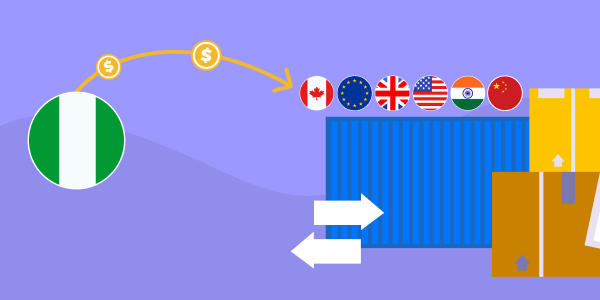
If you're sending $200 to a family member in Lagos, you have options. You can use any number of consumer remittance apps and the experience is mostly fine. But if you're a business owner trying to pay a supplier $15,000 for a container of goods, or a company running payroll for a Nigerian remote team, the calculus is completely different.

Business payments to Nigeria have always been harder than personal remittances. The amounts are larger, the compliance requirements are stricter, and the tolerance for exchange rate surprises is lower. When your margins on imported goods are 12% and you lose 4% on a bad FX conversion, that's a third of your profit gone before the container even clears customs.

The BDC restrictions compound this problem. Businesses that relied on BDC operators as a flexible, fast channel for converting foreign currency into naira now need to find alternatives. And the alternatives aren't always obvious.

Commercial banks can handle the conversion, but anyone who's tried to process a business FX transaction through a Nigerian bank knows the experience. You're looking at days of processing time, multiple document requirements, and rates that may not reflect what you actually end up paying once all the fees are stacked.

The Real Cost Nobody Talks About

When I talk to business owners about cross-border payments to Nigeria, the conversation almost always starts with exchange rates. "What rate will I get?" is the first question. But after a few minutes, we get to the real pain: it's not just the rate, it's everything around it.

There's the time cost of chasing a transaction through correspondent banking chains. A wire from, say, Dubai to Lagos might touch banks in London and New York before it arrives, and each stop adds a day and a fee. I've heard stories of five-day settlement times for what should be a straightforward business payment.

There's the opacity. You initiate a transfer at one rate and then discover that the receiving bank applied its own conversion spread on top of whatever you were quoted. Nobody tells you this upfront. You find out when your supplier says they received less than expected and you're left doing math on the back of an envelope trying to figure out where the money went.

And there's the compliance burden. With the CBN tightening oversight, banks are being extra cautious about forex-related transactions. Documentation requirements are increasing. Some transactions get flagged for manual review, which adds more delays. If you're running a business that depends on predictable cash flow, this uncertainty is genuinely damaging.

What Most Businesses Get Wrong About Nigeria Payments

The biggest mistake I see is treating Nigeria as just another remittance corridor. It's not. Nigeria is Africa's largest economy with over $20 billion in annual remittance inflows, according to the World Bank's latest migration and development brief. But the infrastructure for moving money into the country was built for a different era, one where the CBN maintained a managed float and BDCs served as a pressure valve for excess dollar demand.

That era is ending. The CBN's current approach is to funnel as much FX activity as possible through formal, regulated channels while cracking down on informal ones. This is actually a positive development in the long run because it should make the market more transparent and reduce the parallel market premium that has plagued Nigeria for years.

But in the short term, businesses that haven't adapted their payment infrastructure are getting caught out. I talked to a logistics company last month that was still routing payments through a chain of intermediaries, essentially paying three different entities to move money from London to Lagos. When I asked why, the answer was simple: "That's how we've always done it."

The other common mistake is ignoring the regulatory direction. The CBN isn't going to reverse course on BDC restrictions. If anything, the trend is toward more formalization. Kenya is drafting virtual asset service provider regulations. Ghana's central bank is modernizing its payment systems framework. Across the continent, regulators are pushing financial activity into channels they can monitor and control. Businesses that build their payment workflows around formal, compliant channels now won't have to scramble later.

What to Actually Do About It

If you're a business that regularly sends payments to Nigeria, here's what I'd suggest based on what we've seen work.

First, find out what you're actually paying. Not just the exchange rate, but the total cost. Take your last five Nigeria-bound payments and calculate the all-in cost: the quoted rate versus what was actually received, the transfer fees on both ends, and any intermediary charges. Most businesses I talk to are shocked when they see the real number. It's almost always higher than they thought.

Second, look for platforms that lock in the exchange rate at the point of transfer, not at the point of delivery. The difference matters enormously when you're dealing with a volatile currency like the naira. A rate that shifts by even 1% between initiation and settlement on a $20,000 payment is $200 gone. Over a year of monthly supplier payments, that adds up fast.

Third, consider whether you actually need to go through the correspondent banking system at all. The traditional SWIFT wire was designed for a world where banks were the only game in town. Today, there are licensed fintech platforms that can move money from your account in the US, UK, or Canada directly into a naira account in Nigeria, often in hours rather than days, and at better rates because they're cutting out the intermediary banks.

We built Afriex to handle exactly this kind of transfer, though I'd genuinely encourage you to shop around and compare what's available for your specific corridors and volumes. The right choice depends on where you're sending from, how often, and how much. What matters is that you're not defaulting to the same channel you used five years ago simply because you haven't looked at what's changed.

Fourth, get comfortable with compliance documentation. This might sound like strange advice in a section about making things easier, but it's practical. The CBN's direction is clear: they want visibility into FX flows. Businesses that have clean documentation, proper invoicing, and clear audit trails for their cross-border payments will have an easier time regardless of which channel they use. The ones that get flagged and delayed are usually the ones with sloppy paperwork.

Where This Is All Heading

The bigger picture here is that Nigeria's forex market is being rebuilt in real time. The BDC restrictions are just one piece of a larger restructuring that includes the CBN's new guide to charges for banks and financial institutions (published April 2026), ongoing efforts to unify the exchange rate, and a gradual opening to digital payment platforms that meet regulatory standards.

Meanwhile, the competitive landscape for cross-border payments into Africa is shifting fast. Just last week, Grey, a YC-backed Nigerian fintech, registered as a licensed payment service provider in Canada. Western Union posted weak Q1 earnings as digital competitors continue to eat into traditional remittance volumes. The market is moving toward faster, cheaper, more transparent options, and Nigeria's regulatory changes, painful as they are in the short term, are actually accelerating that transition.

For businesses sending money into Nigeria, the adjustment period is uncomfortable but temporary. The old channels are closing. The new ones are better, if you take the time to find them. And the businesses that figure this out first will have a real advantage over competitors who are still waiting on hold with their bank's forex desk, hoping someone picks up.

Subscribe to the Afriex newsletter
Thank you! Your submission has been received!
Oops! Something went wrong while submitting the form.
TABLE OF CONTENT
Subscribe to our newsletter
Read about our privacy policy.
Thank you! Your submission has been received!
Oops! Something went wrong while submitting the form.

Last week, I got a message from a friend who runs an import business between Toronto and Lagos. He'd been using a Bureau de Change operator for years to convert Canadian dollars into naira for his suppliers. Reliable guy, decent rates, always picked up the phone. Then one morning, the BDC simply told him they couldn't fill his order anymore. No explanation, just "we don't have allocation this week."

I wasn't surprised. I'd been watching the Central Bank of Nigeria quietly tighten the screws on BDC operators for months now. And in late April 2026, it became official: the CBN restricted BDC access to the formal forex market, citing compliance risks. For anyone who's been paying attention, this was inevitable. For businesses that depend on these channels to move money into Nigeria, it was a wake-up call.

What the CBN Actually Did

The Central Bank of Nigeria has been on a multi-year mission to clean up the country's foreign exchange market. The latest move cuts Bureau de Change operators off from the official forex window, effectively starving them of the dollar supply they need to serve their customers. The stated reason is compliance risk. BDCs have long been flagged for weak anti-money laundering controls, and the CBN has decided the risk isn't worth the convenience they provide.

This matters because BDCs have historically served as the bridge between the official and parallel forex markets in Nigeria. They filled a gap that banks couldn't or wouldn't fill, especially for small and mid-sized businesses that needed quick access to dollars or euros without the paperwork burden of going through a commercial bank.

With the naira trading around 1,374 to the dollar as of May 2026 and external reserves declining by $731 million in April alone, the CBN is clearly prioritizing control over convenience. The parallel market spread has narrowed, which sounds like good news until you realize it's partly because the traditional channels that kept that market liquid are being shut down.

Why This Hits Business Payments Hardest

If you're sending $200 to a family member in Lagos, you have options. You can use any number of consumer remittance apps and the experience is mostly fine. But if you're a business owner trying to pay a supplier $15,000 for a container of goods, or a company running payroll for a Nigerian remote team, the calculus is completely different.

Business payments to Nigeria have always been harder than personal remittances. The amounts are larger, the compliance requirements are stricter, and the tolerance for exchange rate surprises is lower. When your margins on imported goods are 12% and you lose 4% on a bad FX conversion, that's a third of your profit gone before the container even clears customs.

The BDC restrictions compound this problem. Businesses that relied on BDC operators as a flexible, fast channel for converting foreign currency into naira now need to find alternatives. And the alternatives aren't always obvious.

Commercial banks can handle the conversion, but anyone who's tried to process a business FX transaction through a Nigerian bank knows the experience. You're looking at days of processing time, multiple document requirements, and rates that may not reflect what you actually end up paying once all the fees are stacked.

The Real Cost Nobody Talks About

When I talk to business owners about cross-border payments to Nigeria, the conversation almost always starts with exchange rates. "What rate will I get?" is the first question. But after a few minutes, we get to the real pain: it's not just the rate, it's everything around it.

There's the time cost of chasing a transaction through correspondent banking chains. A wire from, say, Dubai to Lagos might touch banks in London and New York before it arrives, and each stop adds a day and a fee. I've heard stories of five-day settlement times for what should be a straightforward business payment.

There's the opacity. You initiate a transfer at one rate and then discover that the receiving bank applied its own conversion spread on top of whatever you were quoted. Nobody tells you this upfront. You find out when your supplier says they received less than expected and you're left doing math on the back of an envelope trying to figure out where the money went.

And there's the compliance burden. With the CBN tightening oversight, banks are being extra cautious about forex-related transactions. Documentation requirements are increasing. Some transactions get flagged for manual review, which adds more delays. If you're running a business that depends on predictable cash flow, this uncertainty is genuinely damaging.

What Most Businesses Get Wrong About Nigeria Payments

The biggest mistake I see is treating Nigeria as just another remittance corridor. It's not. Nigeria is Africa's largest economy with over $20 billion in annual remittance inflows, according to the World Bank's latest migration and development brief. But the infrastructure for moving money into the country was built for a different era, one where the CBN maintained a managed float and BDCs served as a pressure valve for excess dollar demand.

That era is ending. The CBN's current approach is to funnel as much FX activity as possible through formal, regulated channels while cracking down on informal ones. This is actually a positive development in the long run because it should make the market more transparent and reduce the parallel market premium that has plagued Nigeria for years.

But in the short term, businesses that haven't adapted their payment infrastructure are getting caught out. I talked to a logistics company last month that was still routing payments through a chain of intermediaries, essentially paying three different entities to move money from London to Lagos. When I asked why, the answer was simple: "That's how we've always done it."

The other common mistake is ignoring the regulatory direction. The CBN isn't going to reverse course on BDC restrictions. If anything, the trend is toward more formalization. Kenya is drafting virtual asset service provider regulations. Ghana's central bank is modernizing its payment systems framework. Across the continent, regulators are pushing financial activity into channels they can monitor and control. Businesses that build their payment workflows around formal, compliant channels now won't have to scramble later.

What to Actually Do About It

If you're a business that regularly sends payments to Nigeria, here's what I'd suggest based on what we've seen work.

First, find out what you're actually paying. Not just the exchange rate, but the total cost. Take your last five Nigeria-bound payments and calculate the all-in cost: the quoted rate versus what was actually received, the transfer fees on both ends, and any intermediary charges. Most businesses I talk to are shocked when they see the real number. It's almost always higher than they thought.

Second, look for platforms that lock in the exchange rate at the point of transfer, not at the point of delivery. The difference matters enormously when you're dealing with a volatile currency like the naira. A rate that shifts by even 1% between initiation and settlement on a $20,000 payment is $200 gone. Over a year of monthly supplier payments, that adds up fast.

Third, consider whether you actually need to go through the correspondent banking system at all. The traditional SWIFT wire was designed for a world where banks were the only game in town. Today, there are licensed fintech platforms that can move money from your account in the US, UK, or Canada directly into a naira account in Nigeria, often in hours rather than days, and at better rates because they're cutting out the intermediary banks.

We built Afriex to handle exactly this kind of transfer, though I'd genuinely encourage you to shop around and compare what's available for your specific corridors and volumes. The right choice depends on where you're sending from, how often, and how much. What matters is that you're not defaulting to the same channel you used five years ago simply because you haven't looked at what's changed.

Fourth, get comfortable with compliance documentation. This might sound like strange advice in a section about making things easier, but it's practical. The CBN's direction is clear: they want visibility into FX flows. Businesses that have clean documentation, proper invoicing, and clear audit trails for their cross-border payments will have an easier time regardless of which channel they use. The ones that get flagged and delayed are usually the ones with sloppy paperwork.

Where This Is All Heading

The bigger picture here is that Nigeria's forex market is being rebuilt in real time. The BDC restrictions are just one piece of a larger restructuring that includes the CBN's new guide to charges for banks and financial institutions (published April 2026), ongoing efforts to unify the exchange rate, and a gradual opening to digital payment platforms that meet regulatory standards.

Meanwhile, the competitive landscape for cross-border payments into Africa is shifting fast. Just last week, Grey, a YC-backed Nigerian fintech, registered as a licensed payment service provider in Canada. Western Union posted weak Q1 earnings as digital competitors continue to eat into traditional remittance volumes. The market is moving toward faster, cheaper, more transparent options, and Nigeria's regulatory changes, painful as they are in the short term, are actually accelerating that transition.

For businesses sending money into Nigeria, the adjustment period is uncomfortable but temporary. The old channels are closing. The new ones are better, if you take the time to find them. And the businesses that figure this out first will have a real advantage over competitors who are still waiting on hold with their bank's forex desk, hoping someone picks up.

Text Link

Lorem ipsum dolor sit amet, consectetur adipiscing elit. Suspendisse varius enim in eros elementum tristique. Duis cursus, mi quis viverra ornare, eros dolor interdum nulla, ut commodo diam libero vitae erat. Aenean faucibus nibh et justo cursus id rutrum lorem imperdiet. Nunc ut sem vitae risus tristique posuere.

Last week, I got a message from a friend who runs an import business between Toronto and Lagos. He'd been using a Bureau de Change operator for years to convert Canadian dollars into naira for his suppliers. Reliable guy, decent rates, always picked up the phone. Then one morning, the BDC simply told him they couldn't fill his order anymore. No explanation, just "we don't have allocation this week."

I wasn't surprised. I'd been watching the Central Bank of Nigeria quietly tighten the screws on BDC operators for months now. And in late April 2026, it became official: the CBN restricted BDC access to the formal forex market, citing compliance risks. For anyone who's been paying attention, this was inevitable. For businesses that depend on these channels to move money into Nigeria, it was a wake-up call.

What the CBN Actually Did

The Central Bank of Nigeria has been on a multi-year mission to clean up the country's foreign exchange market. The latest move cuts Bureau de Change operators off from the official forex window, effectively starving them of the dollar supply they need to serve their customers. The stated reason is compliance risk. BDCs have long been flagged for weak anti-money laundering controls, and the CBN has decided the risk isn't worth the convenience they provide.

This matters because BDCs have historically served as the bridge between the official and parallel forex markets in Nigeria. They filled a gap that banks couldn't or wouldn't fill, especially for small and mid-sized businesses that needed quick access to dollars or euros without the paperwork burden of going through a commercial bank.

With the naira trading around 1,374 to the dollar as of May 2026 and external reserves declining by $731 million in April alone, the CBN is clearly prioritizing control over convenience. The parallel market spread has narrowed, which sounds like good news until you realize it's partly because the traditional channels that kept that market liquid are being shut down.

Why This Hits Business Payments Hardest

If you're sending $200 to a family member in Lagos, you have options. You can use any number of consumer remittance apps and the experience is mostly fine. But if you're a business owner trying to pay a supplier $15,000 for a container of goods, or a company running payroll for a Nigerian remote team, the calculus is completely different.

Business payments to Nigeria have always been harder than personal remittances. The amounts are larger, the compliance requirements are stricter, and the tolerance for exchange rate surprises is lower. When your margins on imported goods are 12% and you lose 4% on a bad FX conversion, that's a third of your profit gone before the container even clears customs.

The BDC restrictions compound this problem. Businesses that relied on BDC operators as a flexible, fast channel for converting foreign currency into naira now need to find alternatives. And the alternatives aren't always obvious.

Commercial banks can handle the conversion, but anyone who's tried to process a business FX transaction through a Nigerian bank knows the experience. You're looking at days of processing time, multiple document requirements, and rates that may not reflect what you actually end up paying once all the fees are stacked.

The Real Cost Nobody Talks About

When I talk to business owners about cross-border payments to Nigeria, the conversation almost always starts with exchange rates. "What rate will I get?" is the first question. But after a few minutes, we get to the real pain: it's not just the rate, it's everything around it.

There's the time cost of chasing a transaction through correspondent banking chains. A wire from, say, Dubai to Lagos might touch banks in London and New York before it arrives, and each stop adds a day and a fee. I've heard stories of five-day settlement times for what should be a straightforward business payment.

There's the opacity. You initiate a transfer at one rate and then discover that the receiving bank applied its own conversion spread on top of whatever you were quoted. Nobody tells you this upfront. You find out when your supplier says they received less than expected and you're left doing math on the back of an envelope trying to figure out where the money went.

And there's the compliance burden. With the CBN tightening oversight, banks are being extra cautious about forex-related transactions. Documentation requirements are increasing. Some transactions get flagged for manual review, which adds more delays. If you're running a business that depends on predictable cash flow, this uncertainty is genuinely damaging.

What Most Businesses Get Wrong About Nigeria Payments

The biggest mistake I see is treating Nigeria as just another remittance corridor. It's not. Nigeria is Africa's largest economy with over $20 billion in annual remittance inflows, according to the World Bank's latest migration and development brief. But the infrastructure for moving money into the country was built for a different era, one where the CBN maintained a managed float and BDCs served as a pressure valve for excess dollar demand.

That era is ending. The CBN's current approach is to funnel as much FX activity as possible through formal, regulated channels while cracking down on informal ones. This is actually a positive development in the long run because it should make the market more transparent and reduce the parallel market premium that has plagued Nigeria for years.

But in the short term, businesses that haven't adapted their payment infrastructure are getting caught out. I talked to a logistics company last month that was still routing payments through a chain of intermediaries, essentially paying three different entities to move money from London to Lagos. When I asked why, the answer was simple: "That's how we've always done it."

The other common mistake is ignoring the regulatory direction. The CBN isn't going to reverse course on BDC restrictions. If anything, the trend is toward more formalization. Kenya is drafting virtual asset service provider regulations. Ghana's central bank is modernizing its payment systems framework. Across the continent, regulators are pushing financial activity into channels they can monitor and control. Businesses that build their payment workflows around formal, compliant channels now won't have to scramble later.

What to Actually Do About It

If you're a business that regularly sends payments to Nigeria, here's what I'd suggest based on what we've seen work.

First, find out what you're actually paying. Not just the exchange rate, but the total cost. Take your last five Nigeria-bound payments and calculate the all-in cost: the quoted rate versus what was actually received, the transfer fees on both ends, and any intermediary charges. Most businesses I talk to are shocked when they see the real number. It's almost always higher than they thought.

Second, look for platforms that lock in the exchange rate at the point of transfer, not at the point of delivery. The difference matters enormously when you're dealing with a volatile currency like the naira. A rate that shifts by even 1% between initiation and settlement on a $20,000 payment is $200 gone. Over a year of monthly supplier payments, that adds up fast.

Third, consider whether you actually need to go through the correspondent banking system at all. The traditional SWIFT wire was designed for a world where banks were the only game in town. Today, there are licensed fintech platforms that can move money from your account in the US, UK, or Canada directly into a naira account in Nigeria, often in hours rather than days, and at better rates because they're cutting out the intermediary banks.

We built Afriex to handle exactly this kind of transfer, though I'd genuinely encourage you to shop around and compare what's available for your specific corridors and volumes. The right choice depends on where you're sending from, how often, and how much. What matters is that you're not defaulting to the same channel you used five years ago simply because you haven't looked at what's changed.

Fourth, get comfortable with compliance documentation. This might sound like strange advice in a section about making things easier, but it's practical. The CBN's direction is clear: they want visibility into FX flows. Businesses that have clean documentation, proper invoicing, and clear audit trails for their cross-border payments will have an easier time regardless of which channel they use. The ones that get flagged and delayed are usually the ones with sloppy paperwork.

Where This Is All Heading

The bigger picture here is that Nigeria's forex market is being rebuilt in real time. The BDC restrictions are just one piece of a larger restructuring that includes the CBN's new guide to charges for banks and financial institutions (published April 2026), ongoing efforts to unify the exchange rate, and a gradual opening to digital payment platforms that meet regulatory standards.

Meanwhile, the competitive landscape for cross-border payments into Africa is shifting fast. Just last week, Grey, a YC-backed Nigerian fintech, registered as a licensed payment service provider in Canada. Western Union posted weak Q1 earnings as digital competitors continue to eat into traditional remittance volumes. The market is moving toward faster, cheaper, more transparent options, and Nigeria's regulatory changes, painful as they are in the short term, are actually accelerating that transition.

For businesses sending money into Nigeria, the adjustment period is uncomfortable but temporary. The old channels are closing. The new ones are better, if you take the time to find them. And the businesses that figure this out first will have a real advantage over competitors who are still waiting on hold with their bank's forex desk, hoping someone picks up.

Related Articles

No items found.

Heading 1

Heading 2

Heading 3

Heading 4

Heading 5
Heading 6

Lorem ipsum dolor sit amet, consectetur adipiscing elit, sed do eiusmod tempor incididunt ut labore et dolore magna aliqua. Ut enim ad minim veniam, quis nostrud exercitation ullamco laboris nisi ut aliquip ex ea commodo consequat. Duis aute irure dolor in reprehenderit in voluptate velit esse cillum dolore eu fugiat nulla pariatur.

Block quote

Ordered list

  1. Item 1
  2. Item 2
  3. Item 3

Unordered list

Text link

Bold text

Emphasis

Superscript

Subscript